
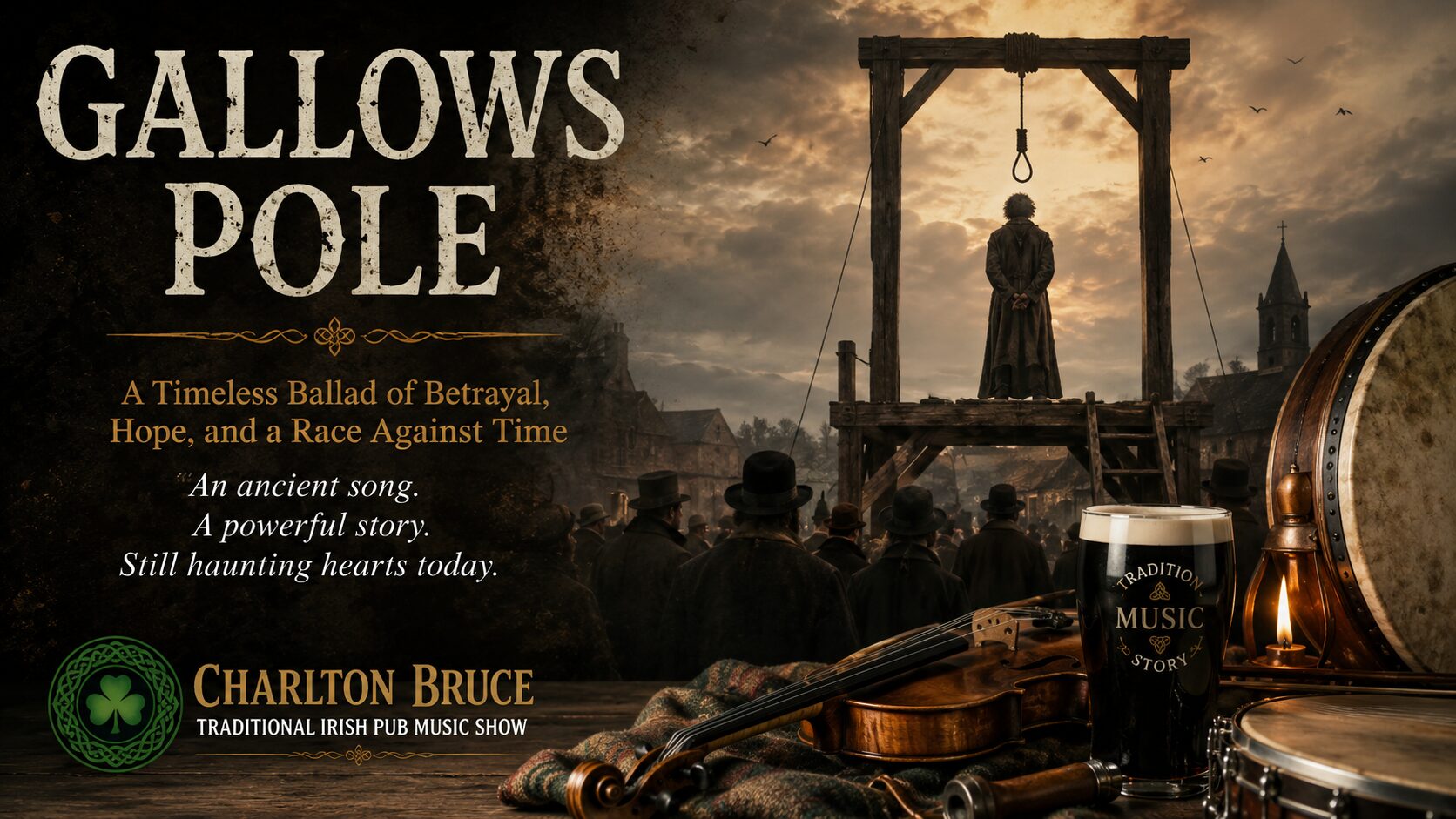
Few traditional songs carry the emotional force and grim storytelling power of Gallows Pole. Whether performed as a haunting acoustic lament or a thunderous folk-rock anthem, Gallows Pole remains one of the most enduring execution ballads in the Irish, Scottish, and English folk tradition. For audiences of the Charlton Bruce Traditional Irish Pub Music Show, the song represents everything that makes traditional pub music unforgettable: tension, tragedy, dark humor, and the raw humanity of ordinary people facing impossible circumstances.
Origins of “Gallows Pole”
The origins of Gallows Pole stretch back centuries. The song descends from an old British ballad commonly known as The Maid Freed from the Gallows, which appeared in numerous versions across Scotland, Ireland, England, and later Appalachia. Folk songs traveled easily across the sea and across generations, changing with every singer who carried them. Like many traditional ballads, Gallows Pole survived because it spoke to universal fears of death, betrayal, poverty, and the desperate hope that someone might save you at the last moment.
“Gallows Pole” – The Story
Gallows Pole tells a simple but devastating story. A condemned man stands on the scaffold awaiting execution. One by one, he asks friends and family members whether they have brought gold or silver to bribe the hangman and save his life. In many versions, his loved ones fail him until the final moment. Some arrive too late. Others refuse to help entirely. The song’s repetitive structure builds unbearable tension as the noose tightens and hope slips away.
What makes Gallows Pole so powerful in live performance is its relentless momentum. Traditional folk music often relies on repetition to create emotional intensity, and this song uses that technique masterfully. Each verse adds another layer of dread. In a crowded Irish pub, audiences often grow silent as the story unfolds. You can hear the glasses stop clinking. People lean forward. Everyone knows they are listening to something ancient and deeply human.
“Gallows Pole” – An Enduring Song
One reason Gallows Pole has endured is its flexibility. Different regions adapted the song to fit local traditions and musical styles. Appalachian versions became slower and mournful, while some Scottish and Irish interpretations leaned into the stark drama of the lyrics. The song eventually crossed into blues, folk revival, and rock music during the twentieth century.
Perhaps the most famous modern recording of Gallows Pole came from Led Zeppelin on their 1970 album Led Zeppelin III. Their version transformed the traditional ballad into a hypnotic folk-rock masterpiece. Beginning with sparse acoustic instrumentation, the song gradually accelerates into a frantic crescendo driven by banjo, mandolin, and pounding rhythm. It introduced a new generation of listeners to the ancient ballad tradition while preserving the song’s core darkness and tension.
A Traditional Pub Favorite
Yet long before rock bands rediscovered it, Gallows Pole belonged to ordinary singers in pubs, kitchens, and village gatherings. Traditional musicians valued songs that told memorable stories, and execution ballads held a strange fascination throughout the British Isles. Public hangings were once common public spectacles, and folk songs often reflected the harsh realities of that world. Ballads like Gallows Pole served as warnings, entertainment, moral lessons, and emotional catharsis all at once.
For performers in traditional Irish pub settings, Gallows Pole works exceptionally well because it creates atmosphere. The audience becomes part of the story. The slow build of the song allows singers to command the room through pacing and dramatic restraint. Charlton Bruce’s approach to traditional music embraces precisely this kind of storytelling performance, where the emotional truth of the song matters more than technical perfection.
A Universal Story
There is also something timeless about the themes in Gallows Pole. The fear of abandonment, the hope for redemption, and the uncertainty of human loyalty remain as relevant today as they were hundreds of years ago. Traditional songs survive because they continue speaking to modern audiences, even when their historical settings have changed.
Many listeners are surprised to discover how widespread execution ballads once were in Celtic and Anglo folk traditions. Songs about poachers, highwaymen, rebels, transported prisoners, and condemned lovers filled old songbooks throughout Ireland and Scotland. These ballads preserved stories that official histories often ignored. In many cases, folk songs gave ordinary working-class people a voice and a memory.
When performed live during the Charlton Bruce Traditional Irish Pub Music Show, Gallows Pole becomes more than an old folk song. It becomes an experience shared between performer and audience and a reminder that traditional music still has the power to unsettle, captivate, and move people deeply. That is why songs like this continue to survive generation after generation.
In the end, Gallows Pole stands as one of the great traditional ballads of the folk world: dark, dramatic, unforgettable, and profoundly human. Whether heard in a quiet pub, around a campfire, or through the speakers of a classic rock album, the song continues to tighten its grip on listeners right up to the final verse.
Share Your Thoughts!
What do you think? Share your thoughts in the comments below! Interested in booking Charlton Bruce? Click here for more information and a quote!
Blog
This section provides an overview of the blog, showcasing a variety of articles, insights, and resources to inform and inspire readers.
-
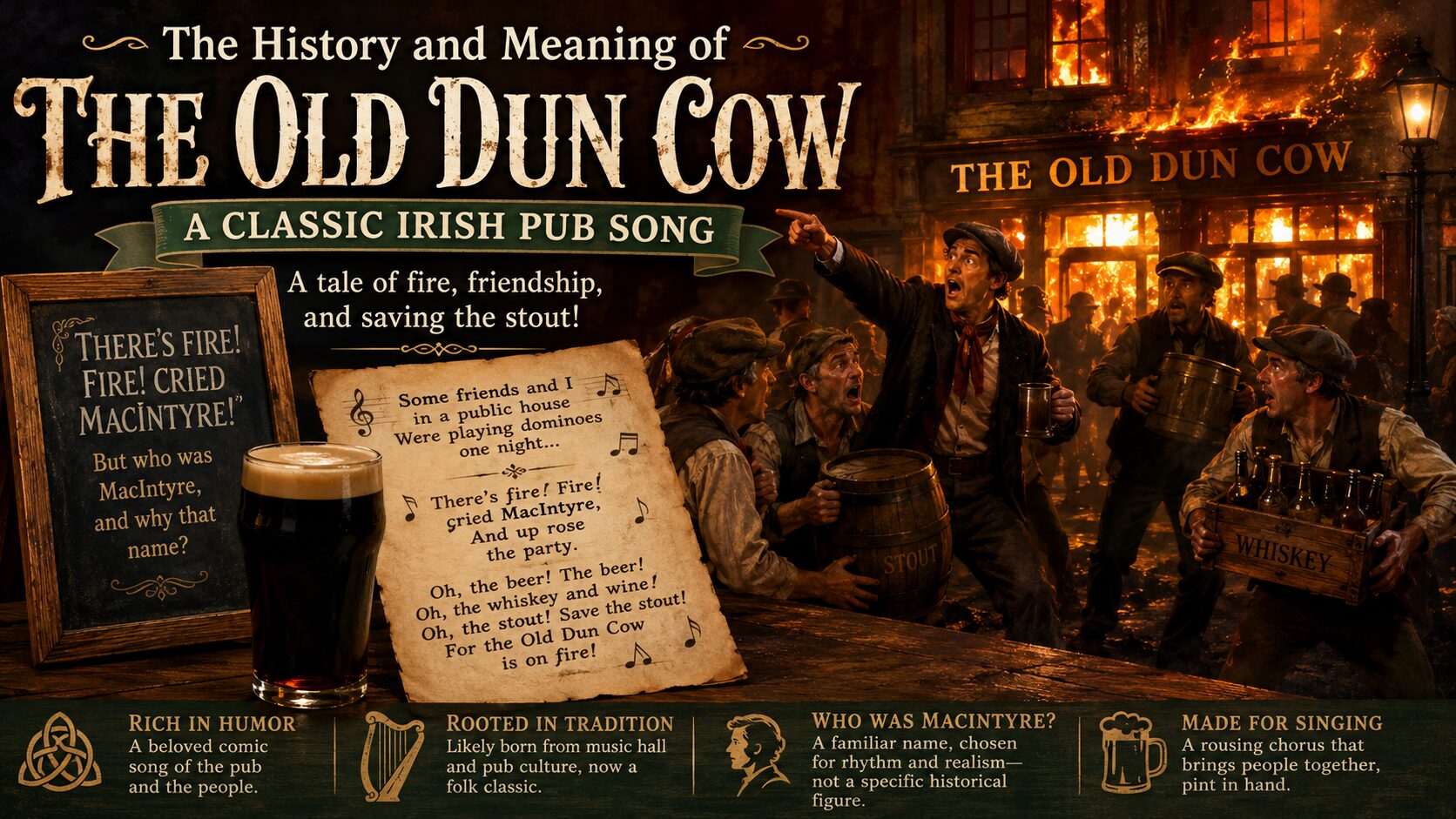
The “Old Dun Cow” Story, History, and Meaning
Few traditional drinking songs have survived with as much humor, chaos, and sing-along charm as…
-
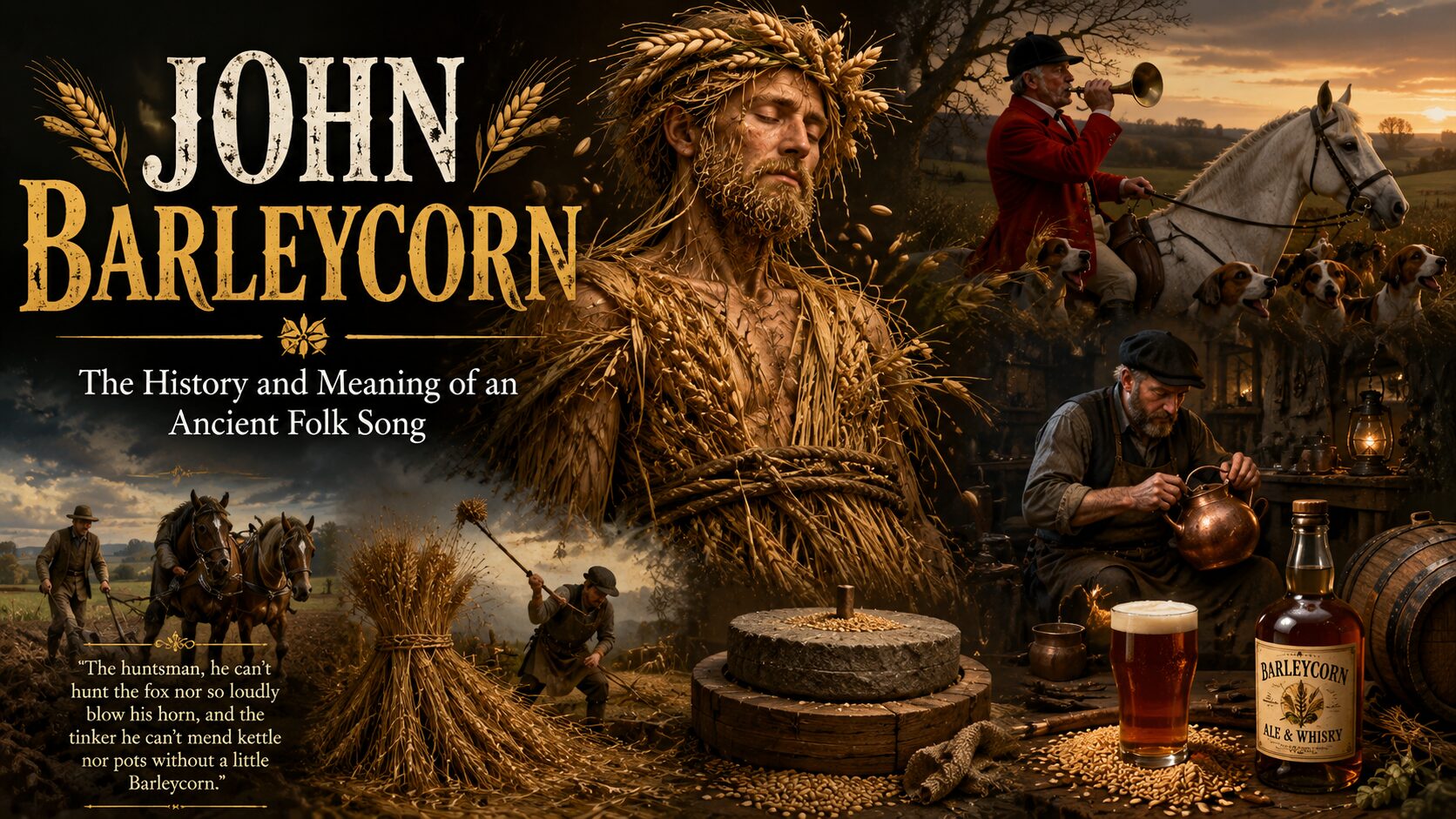
John Barleycorn: The History and Meaning Behind the Ancient Folk Song
Few traditional folk songs are as strange, haunting, and enduring as “John Barleycorn.” Passed down…
-
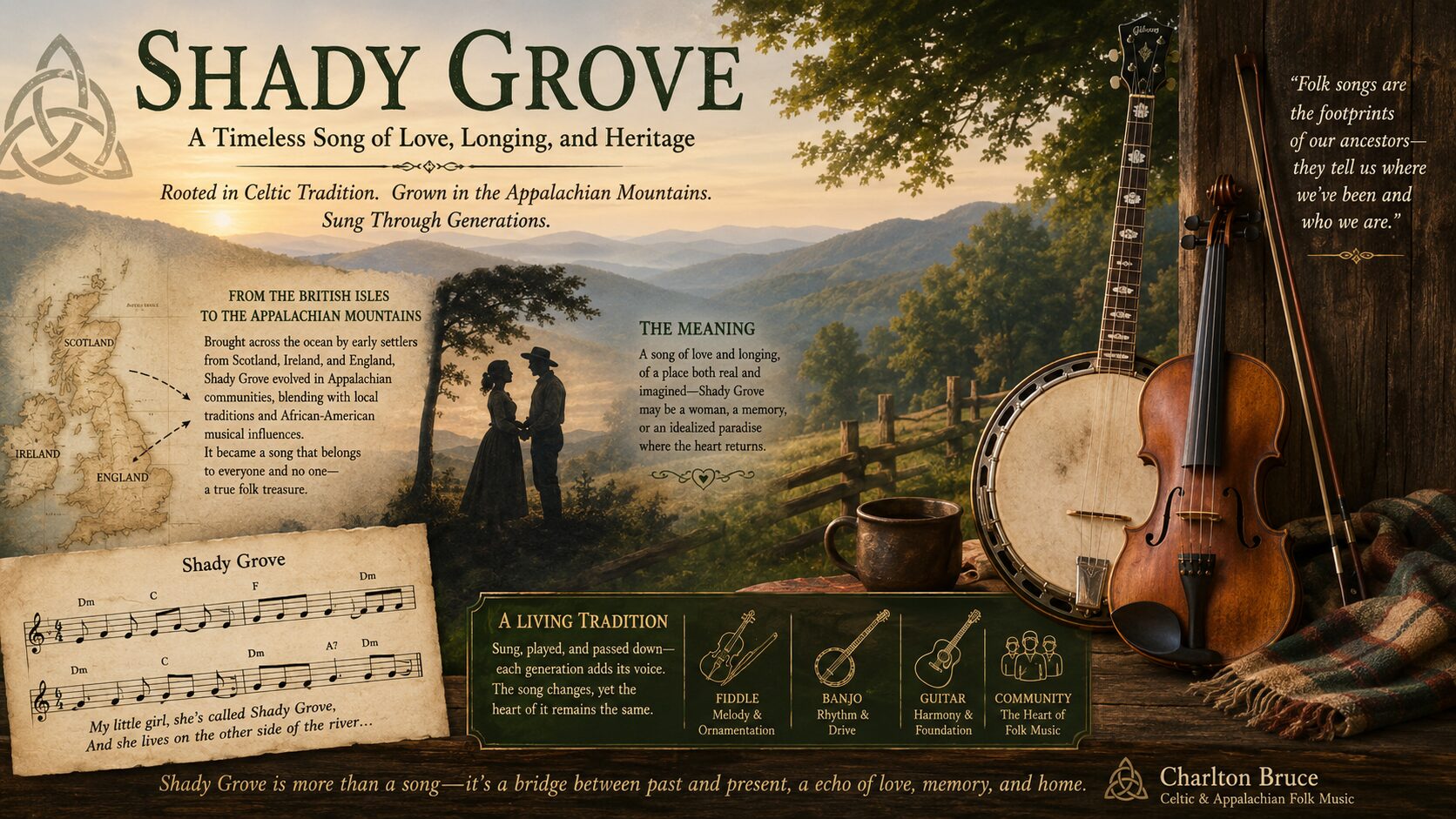
Shady Grove: A Folk Song Rooted in Celtic and Appalachian Tradition
The song “Shady Grove” stands as one of the most enduring and widely performed traditional…

