
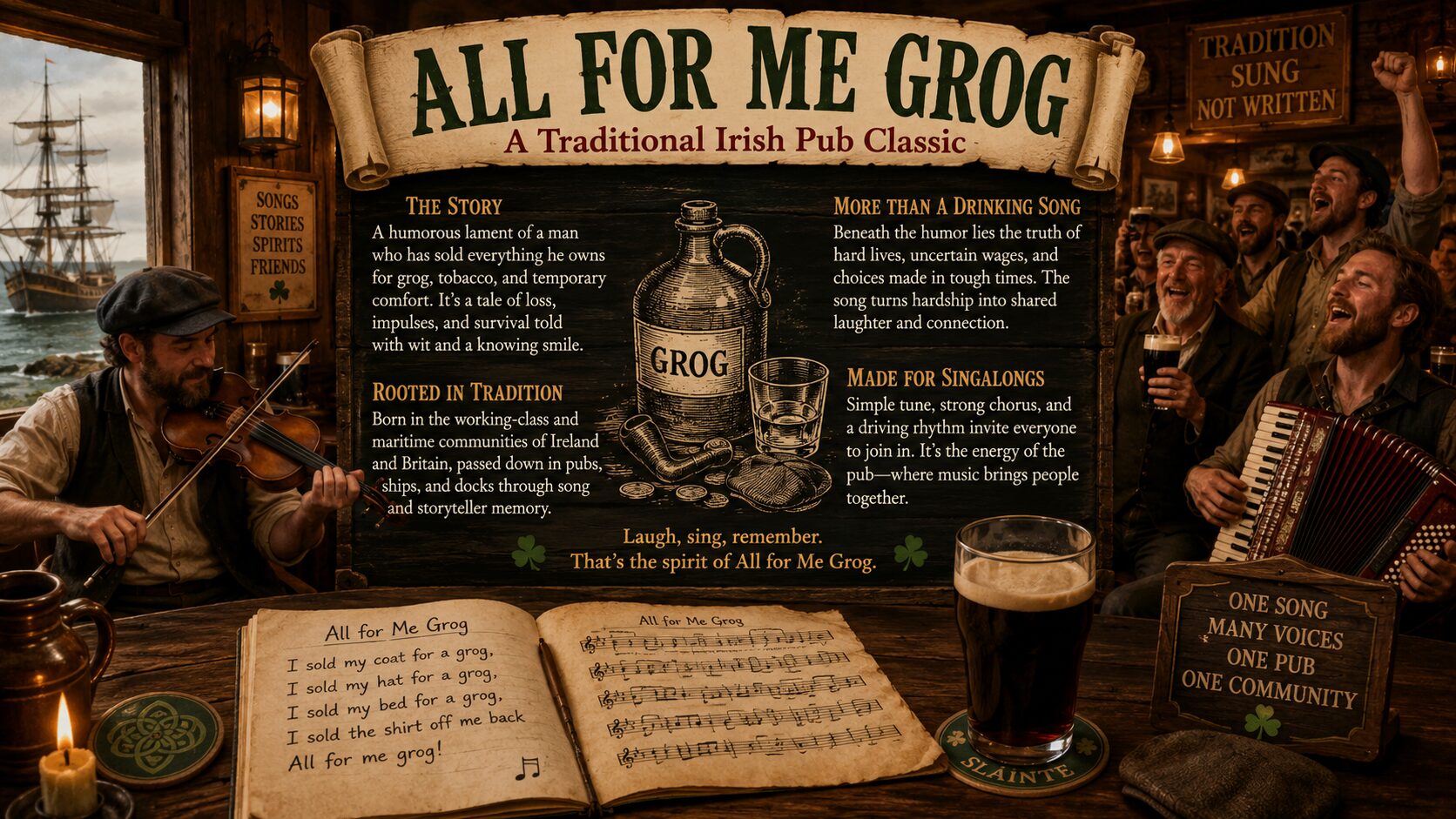
All for Me Grog – A Traditional Pub Song of Memory, Humor, and Hard Living
The song “All for Me Grog” is a traditional folk tune with roots in the broader maritime and pub-song traditions of the British Isles, particularly Ireland and England. Like many folk songs, its exact origin is difficult to trace because it evolved through oral tradition rather than written composition. What is clear is that it emerged from working-class and seafaring communities where music was a shared social experience rather than a formal performance.
In these environments, songs were passed from person to person in pubs, aboard ships, and in labor camps. They were shaped by repetition, improvisation, and communal memory. “All for Me Grog” belongs to a category of songs that reflect everyday life rather than historical events or heroic legends. Instead, it captures the humor and hardship of ordinary people navigating unstable working conditions.
The word “grog” itself refers to an alcoholic drink, originally diluted rum issued to sailors in the British Royal Navy. Over time, the term became more general, representing alcohol in folk culture. This naval connection helps explain why the song is often associated with maritime traditions.
All for Me Grog – Meaning and Narrative Structure
At its core, “All for Me Grog” is a humorous lament. The narrator describes selling off possessions, clothing, furniture, and other personal belongings to purchase alcohol, tobacco, and temporary comfort. The repeated chorus reinforces the idea that everything has been traded away “for me grog.”
However, the meaning is not simply about alcohol consumption. Instead, the song uses exaggeration and humor to explore themes of loss, impulsivity, and survival. The narrator is not portrayed as tragic in a purely serious sense. Instead, there is a tone of self-awareness and comedic resignation.
This duality is important. You are meant to laugh while also recognizing the underlying reality: life can be unstable, and people often cope with that instability in imperfect ways.
The song’s structure reinforces this message. Each verse escalates the level of loss, while the chorus resets the story with a simple, memorable refrain. This repetition makes the song easy to learn and ideal for group singing.
Working-Class Life and Folk Storytelling
When you examine “All for Me Grog” in historical context, it reflects working-class experiences in a pre-modern economy where wages were inconsistent, and living conditions were often harsh. For sailors, dockworkers, and itinerant laborers, possessions were minimal and easily replaced or sold when money was needed quickly.
In this sense, the song can be understood as a cultural expression of economic instability. Rather than presenting a moral judgment, it portrays behavior that would have been recognizable and relatable to its original audiences.
Folk songs like this served several functions:
- They provided entertainment in communal spaces
- They allowed people to share personal and collective experiences
- They helped temper emotions through humor and music
- They preserved everyday history through oral storytelling
In pub settings, songs like “All for Me Grog” became social glue. Everyone could participate, regardless of musical skill.
Musical Style and Performance Tradition
One of the defining features of “All for Me Grog” is its accessibility. It is designed for group participation rather than solo performance. The melody is simple, the rhythm is steady, and the chorus is easy to remember.
In traditional Irish pub music settings, you will often hear it performed with:
- Acoustic guitar or fiddle
- Bodhrán (Irish frame drum) for rhythmic drive
- Accordion or tin whistle for melodic texture
- Strong vocal emphasis to encourage audience participation
The performance is often energetic and communal. The song gains power not from complexity, but from collective voice. As more people join in, the emotional impact increases. This is a key reason the song has endured. It functions as both entertainment and shared experience.
Humor, Irony, and Emotional Expression in “All for Me Grog”
A central element of “All for Me Grog” is its use of humor. The narrator’s having sold nearly everything for drink is objectively a form of loss, yet it is presented with lightness and irony.
This reflects a broader tradition in Irish and British folk music, where humor is used as a way to process hardship. Instead of a direct complaint or tragedy, the song turns experience into a story, and story into communal laughter. When Charlton performs it, audiences often lift their mugs in unison and in celebration. You can think of it as emotional translation: difficult realities are reshaped into something that can be shared in a group setting without becoming overwhelming.
The irony in the song also creates distance. The narrator is both participant and observer of their own behavior, which adds depth to the humor.
All for Me Grog: Modern Revival and Continuing Popularity
Today, “All for Me Grog” remains a staple in Irish pubs, folk festivals, and sea shanty revivals around the world. Its continued popularity comes from its simplicity and adaptability.
Modern audiences connect with it because:
- It is easy to sing without training
- It creates immediate group participation
- It carries a sense of tradition and authenticity
- It blends humor with relatable human behavior
In contemporary performance, the song often appears alongside other traditional folk standards, reinforcing its place in the shared repertoire of pub music culture.
Even outside Ireland, it has become part of the global folk revival movement, particularly in communities interested in maritime history and traditional acoustic music. It endures because it is not tied to a single moment in history. Instead, it reflects ongoing human themes: making choices under pressure, finding humor in difficulty, and sharing stories through music.
In the Charlton Bruce Traditional Irish Pub Music show, it remains a powerful reminder that folk music is about the shared experience of being human in community.
Share Your Thoughts!
What do you think? Share your thoughts in the comments below! Interested in booking Charlton Bruce? Click here for more information and a quote!
Blog
This section provides an overview of the blog, showcasing a variety of articles, insights, and resources to inform and inspire readers.
-
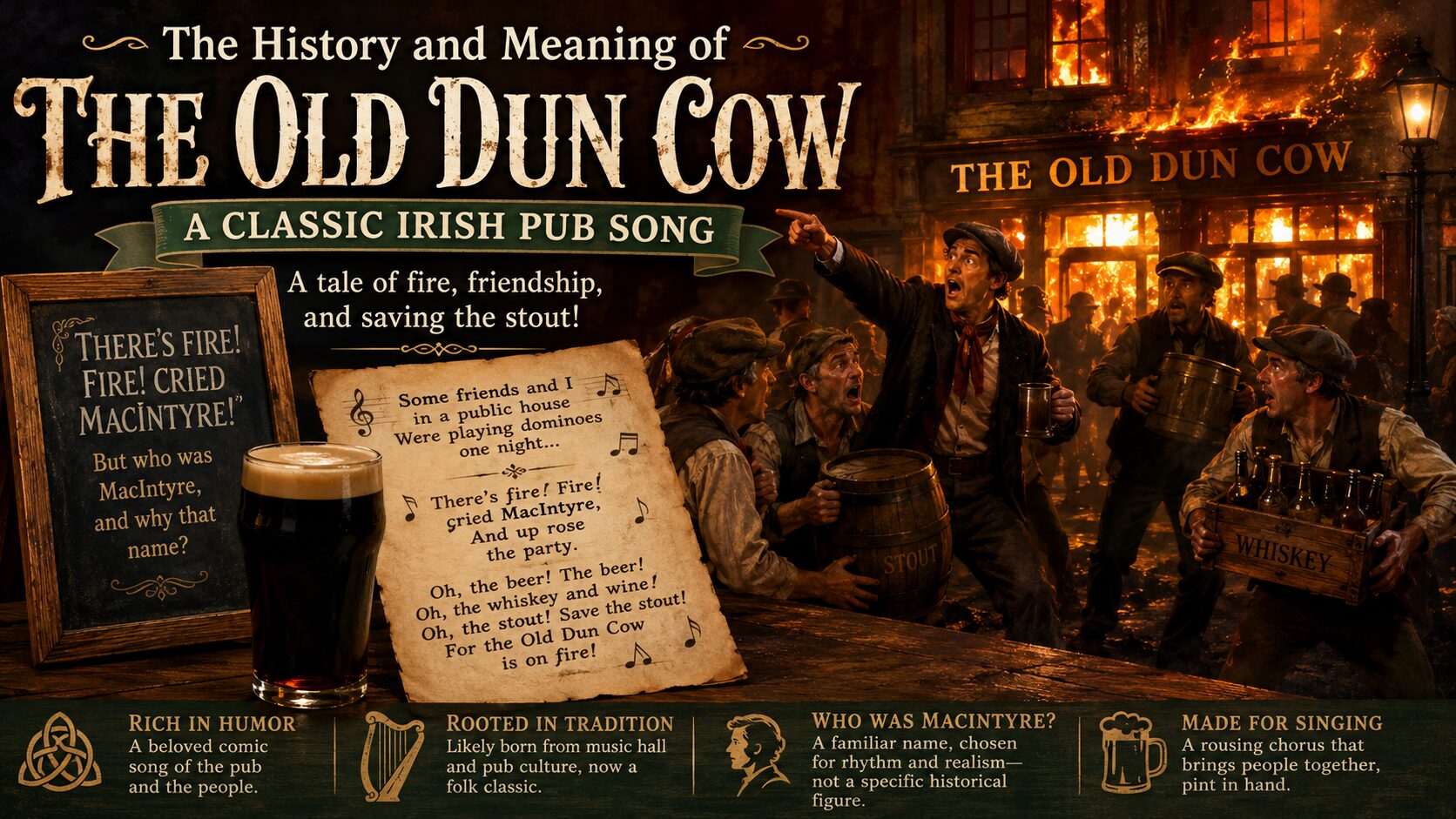
The “Old Dun Cow” Story, History, and Meaning
Few traditional drinking songs have survived with as much humor, chaos, and sing-along charm as…
-
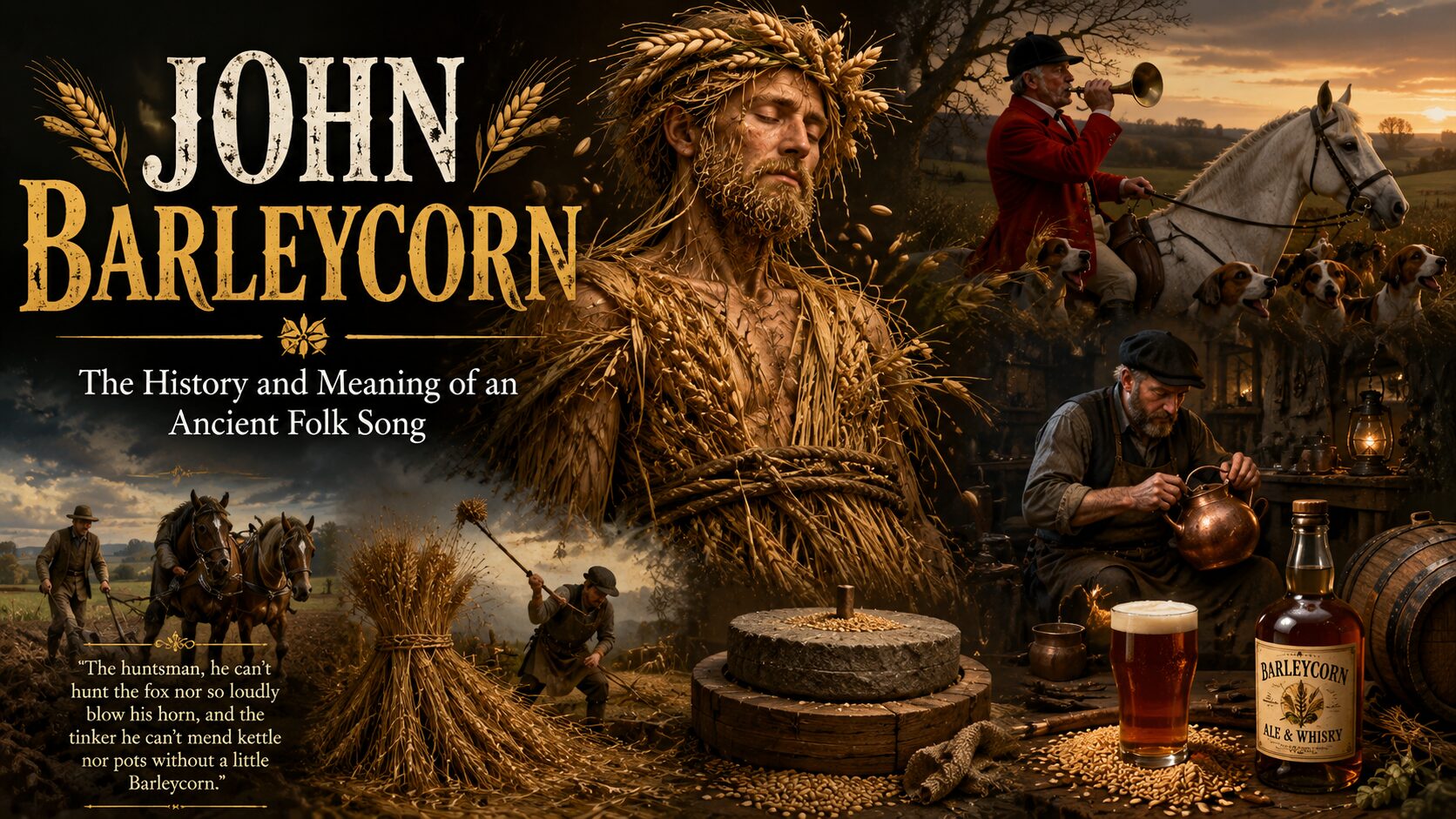
John Barleycorn: The History and Meaning Behind the Ancient Folk Song
Few traditional folk songs are as strange, haunting, and enduring as “John Barleycorn.” Passed down…
-
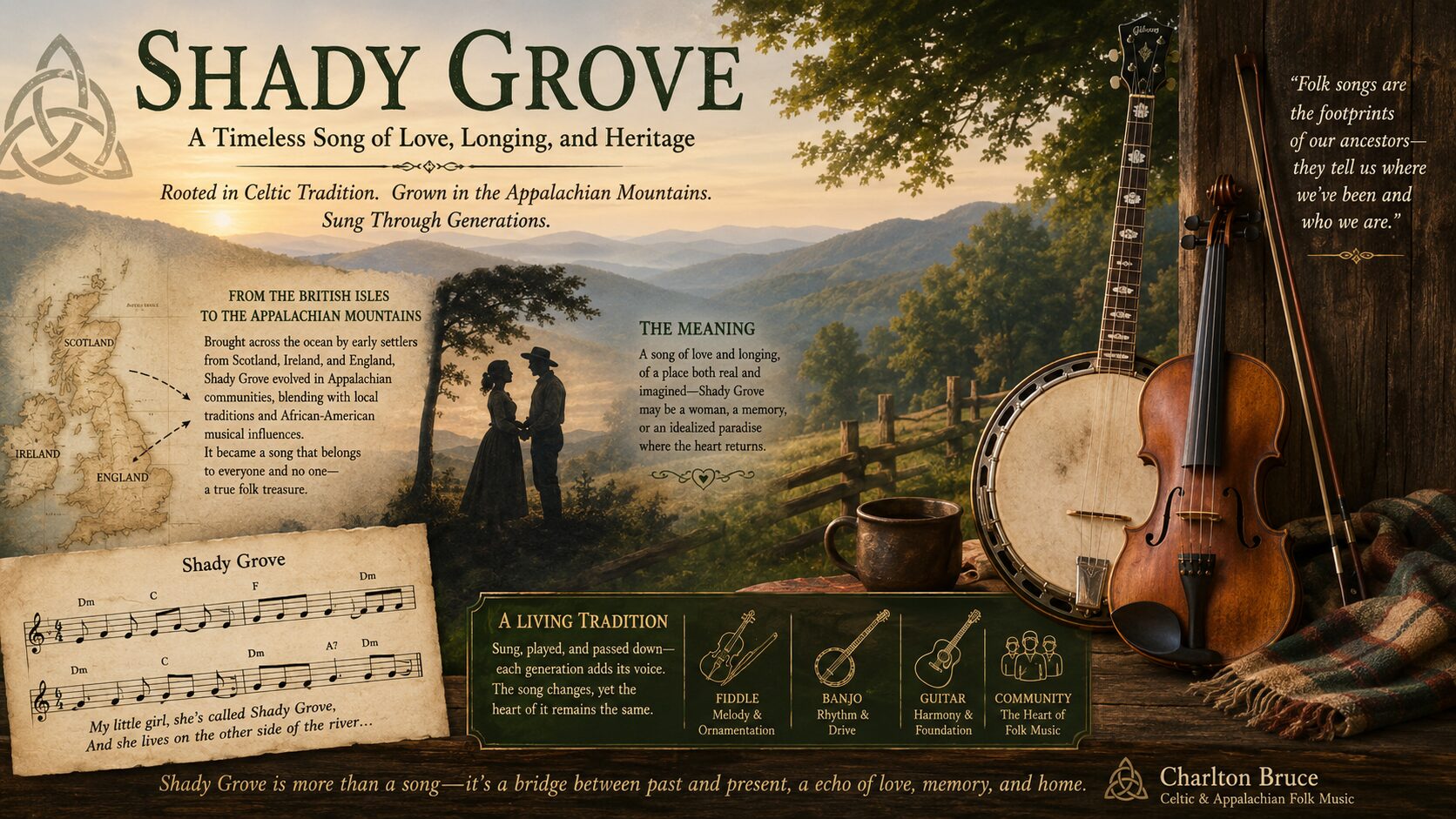
Shady Grove: A Folk Song Rooted in Celtic and Appalachian Tradition
The song “Shady Grove” stands as one of the most enduring and widely performed traditional…

